

Smart Carpark
HKUST Green Parking System
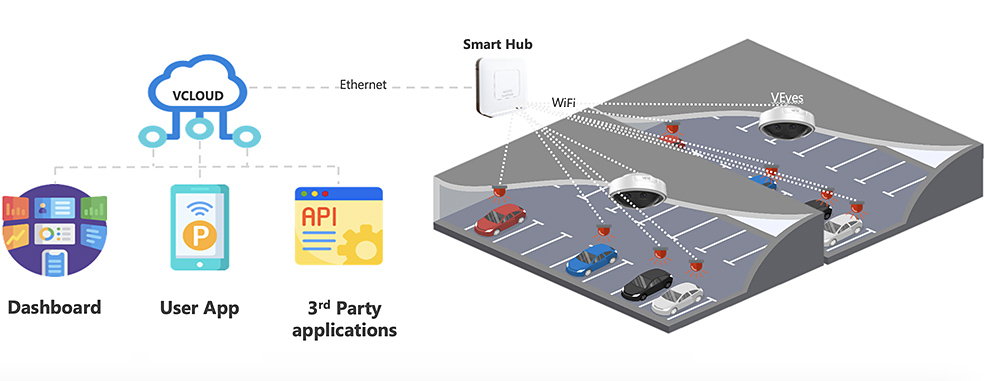
This project is to design a sustainable, smart and cost-effective parking system to incentivize carpooling and improve the utilization of EV charging stations on the campus. The core of the enabling technology is an edge AI camera we have designed for license plate recognition (LPR) and vacancy detection. The first of its kind in the market, this novel AIoT (AI + IoT) project is a collaboration with Campus Management Office (CMO) and Information Technology Services Office (ITSO), two leading university units for carpark management and software system development, respectively. The system will be fully integrated into our existing “HKUST Staff” mobile app for the university staff to enjoy at the end of the project period.
Team Members
- Prof. Shueng-Han Gary CHAN — Professor, Department of Computer Science & Engineering (CSE)
- Mr. Alex CHEUNG — Director, Campus Management Office (CMO)
- Mr. Derry FONG — Director, Information Technology Services Office (ITSO)
- Mr. Martin CHUNG — Officer, CMO
- Ms. Vicki CHAN — Manager (Application Systems), ITSO
- Dr. K. K. LAI — Manager, CSE
- Mr. Aaron YANG — Assistant Manager, CSE
Core Technology & Architecture
Carpooling
Background
The campus is currently facing a severe shortage of parking spaces, and the situation is expected to become more acute as the university expands in its staffing in the near future.
The Solution
In this project, we encourage faculties and staff to carpool, where some priority parking slots will be reserved for carpool drivers, as well as having the right to park at these slots when entering the campus.
Electric vehicle (EV)
Background
As more drivers are adopting electric cars, efficient sharing of the limited number of charging stations becomes critical.
The Solution
- Fast-Charging: There are two types of charging stations in the campus: fast charging stations and medium charging stations. For the fast-charging stations, we will collaborate with ITSO and CMO to develop a reservation system integrated into the existing HKUST Staff app to facilitate the fast EV changer sharing (only the car reserved for the time may take the charging station).
- Medium-Charging: For the many medium-charging stations, we will have an open system where the staff app provides real-time information to drivers about which stations are currently vacant/available for charging.
Watch Green Parking with Edge AI Camera for Carpoolers and Electric Vehicle Drivers
Core Technology & Hardware Platform
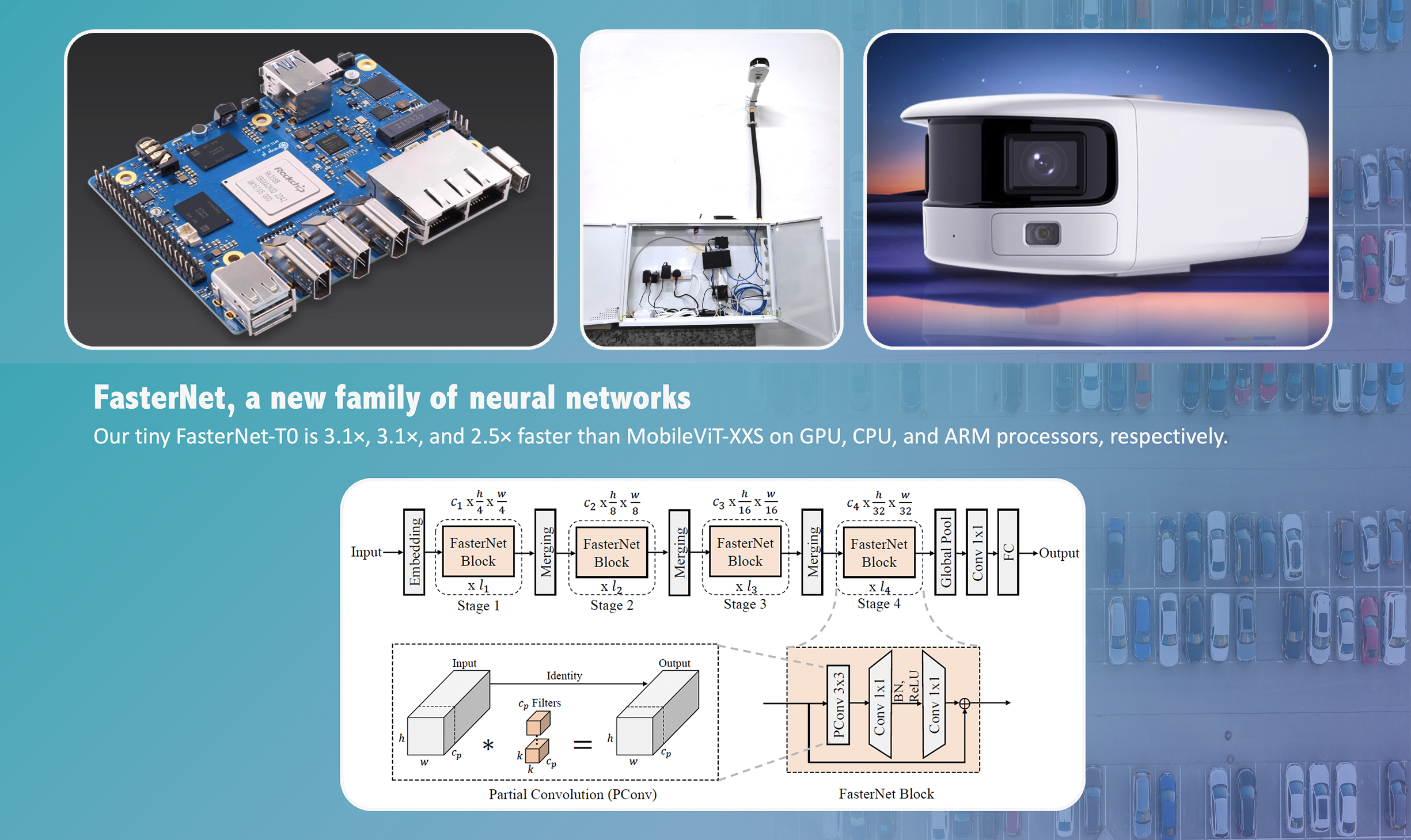
Edge-AI platform concept for the Smart Carpark project, combining the local computing board, camera hardware and vision-model architecture for on-site processing.
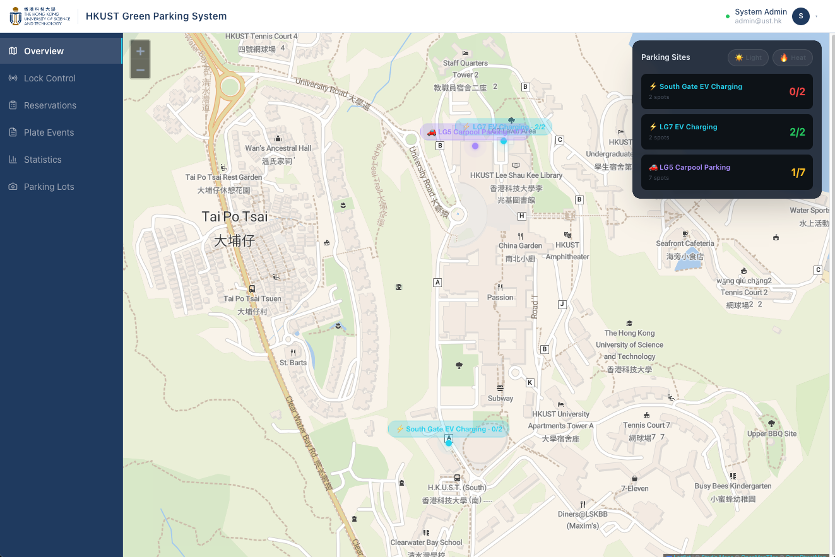
HKUST Green Parking System dashboard showing the campus map and real-time availability of EV-charging and carpool parking sites.
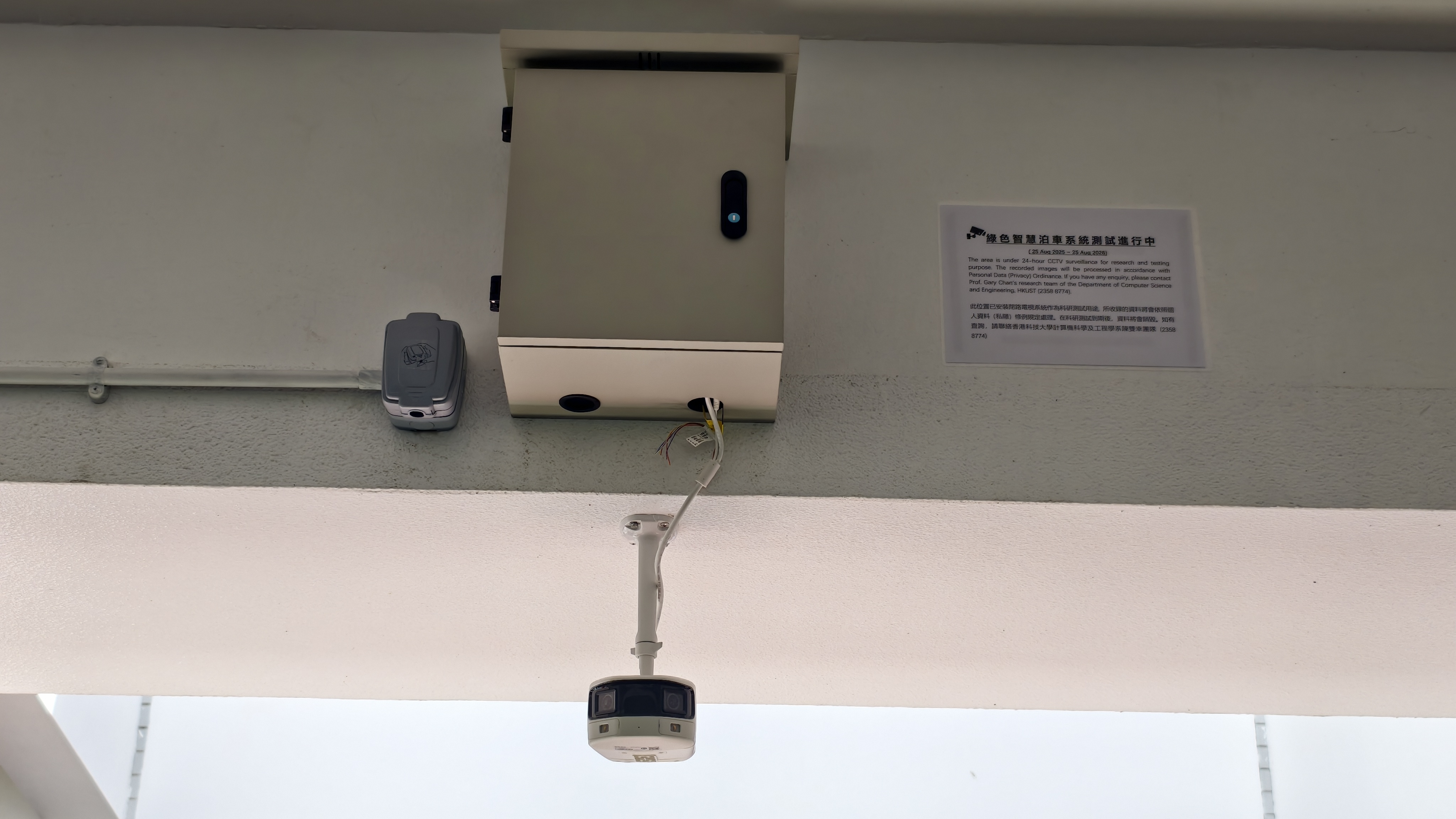
Green Parking test-site installation, showing the overhead edge camera, equipment enclosure and associated access-control hardware.
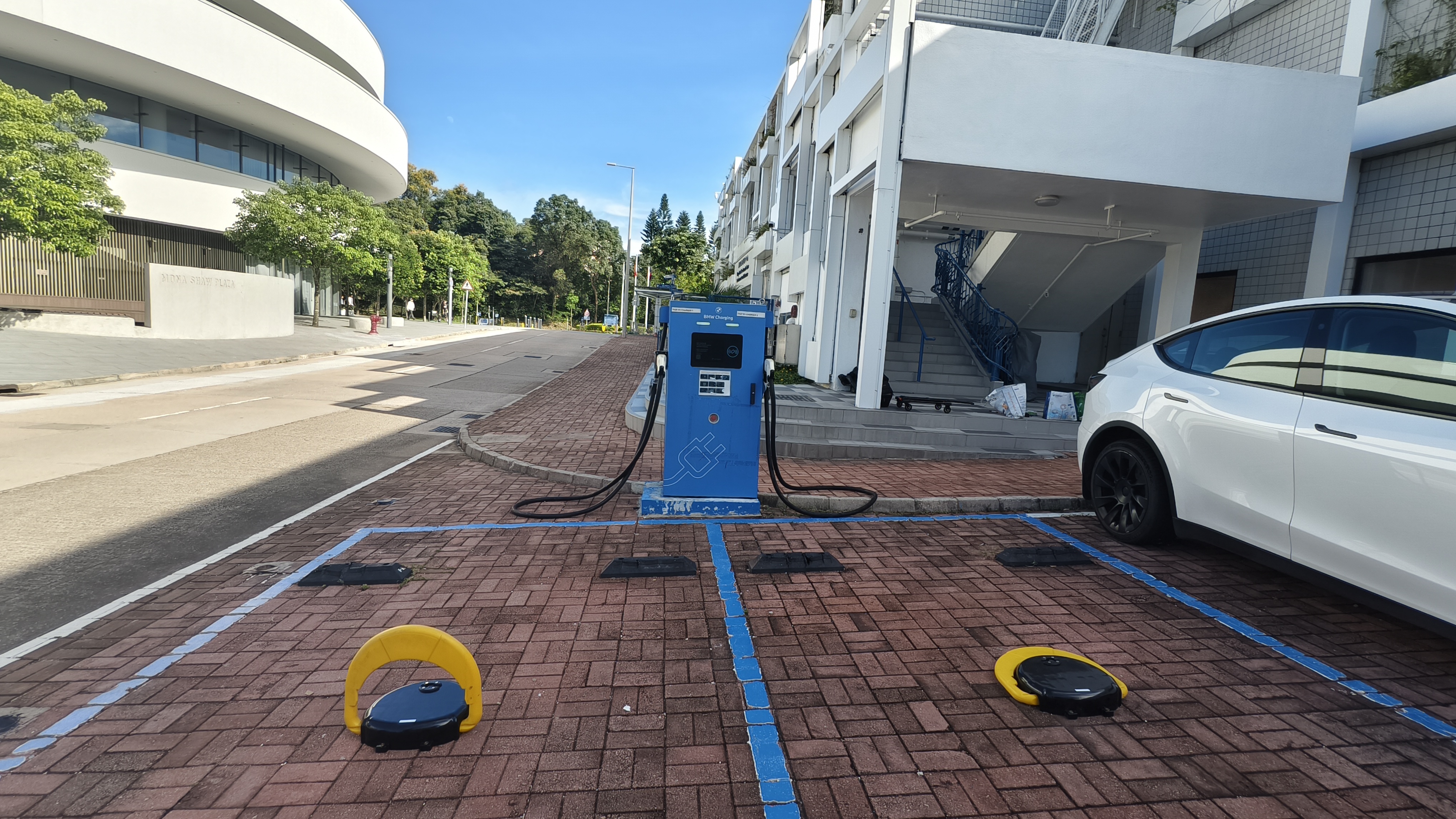
HKUST EV-charging bays equipped with ground locks, supporting reservation-based parking access and charging management.
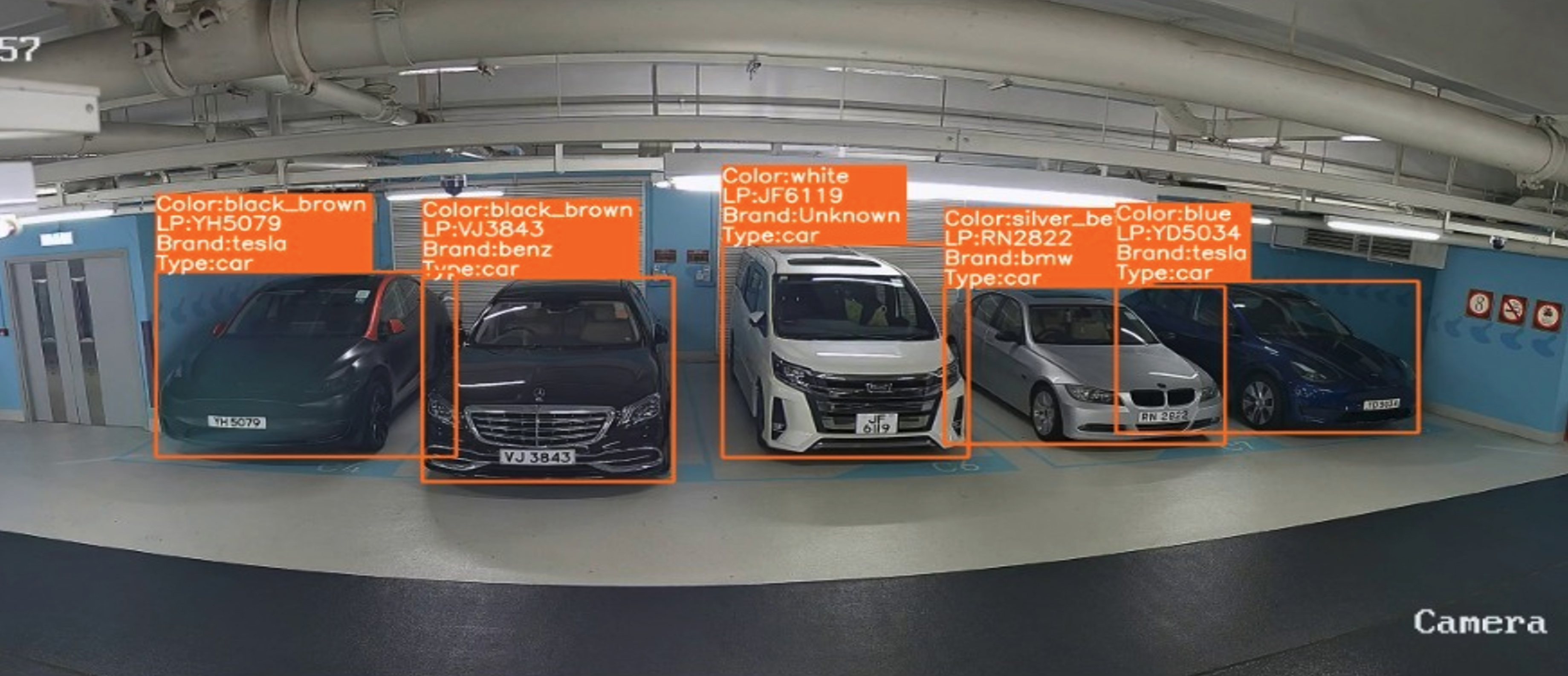
Internal demonstration of vehicle detection and licence-plate recognition in a car park. All licence plates and identifiers will be blurred before public use.
Impact & Metrics
The HKUST Smart Carpark system advances campus sustainability by transforming how faculty and staff park, charge, and commute.
- Reduced Congestion & Emissions: Fewer vehicles mean less traffic congestion, lower carbon emissions, and reduced demand for parking space.
- Smart Resource Management: Efficiently managing charging stations for electric vehicles supports the transition to cleaner, renewable energy sources, further lowering the campus's carbon footprint.
This approach not only creates a sustainable environment but also fosters a community mindset geared towards eco-friendly practices.
- Target Impact:
- Effectively encourage campus carpooling, cut search time, improve fast-charger turnover, and reduce violations and overstays
- Achieve ≥100 carpool registrations and ≥200 fast‑charge reservations in three months
- Ensure ≥99% system availability, helping reduce single-occupancy trips and carbon emissions.
Milestones & Status
Following initial deployment and rigorous integration testing, the project focuses on continuous, user-driven enhancement to align with evolving campus needs.
- Iterative Optimization: Monitoring live system performance and user feedback to approach ensures an efficient, user-friendly parking system that aligns with evolving campus needs.
- Ecosystem Expansion: Exploring deeper integrations with other campus systems and forming partnerships with external stakeholders.
- Smart Campus Vision: Embracing ongoing innovation, enhancing the parking experience, and promoting eco-friendly practices.
Relevant Links
- Smart Car Park Project: https://cse.hkust.edu.hk/smartiot/SmartCarpark/index.html
- Green Parking with Edge AI Camera for Carpoolers and Electric Vehicle Drivers (Sustainable Smart Campus as a Living Lab): https://ssc.hkust.edu.hk/projects/embracing-digital-resources-for-livability/green-parking-with-edge-ai-camera-for