

Crowd and Traffic Management for Mega Events
AIoT and Online Simulation for Mega Event Traffic Management
The project explores ways to better understand and manage the movement pressures that can arise around large-scale events. Such events can involve rapid changes in pedestrian movement, public-transport demand, and road traffic as audiences arrive and leave. Under the Smart Traffic Fund, the HKUST team is undertaking research and application work aimed at supporting the future development of more coordinated and evidence-informed approaches to crowd and traffic management.
Team Members
- Prof. Shueng-Han Gary CHAN — Principal Investigator
- Prof. Hong K. LO — Co-Investigator
- Dr. Ka Fai NG — Principal Research Engineer and Traffic Team Leader
- Dr. Kent CHEN — Assistant IT Manager and Project Manager
- Mr. Zhongming LIN — Software Engineer
- Mr. Aaron YANG — Software Engineer / AIoT Team Leader
Core Technology & Architecture
The work brings together expertise in AIoT, data analysis, digital systems and urban transport, with the long-term aim of helping relevant stakeholders understand event-related movement patterns and plan appropriate responses.
Key Features / Highlights:
- AI-powered video analytics for vehicle flow, pedestrian counting, crowd density and movement analysis.
- Portable edge-AI cameras that complement fixed sensing infrastructure for event-specific coverage.
- Historical-event dashboard with map, time-series and arrival/dispersal pattern visualisation.
- Online simulation, short-term forecasting and scenario-based adaptive traffic signal control.
- Integrated decision support that connects crowd, traffic, and road-network conditions for mega-event management.
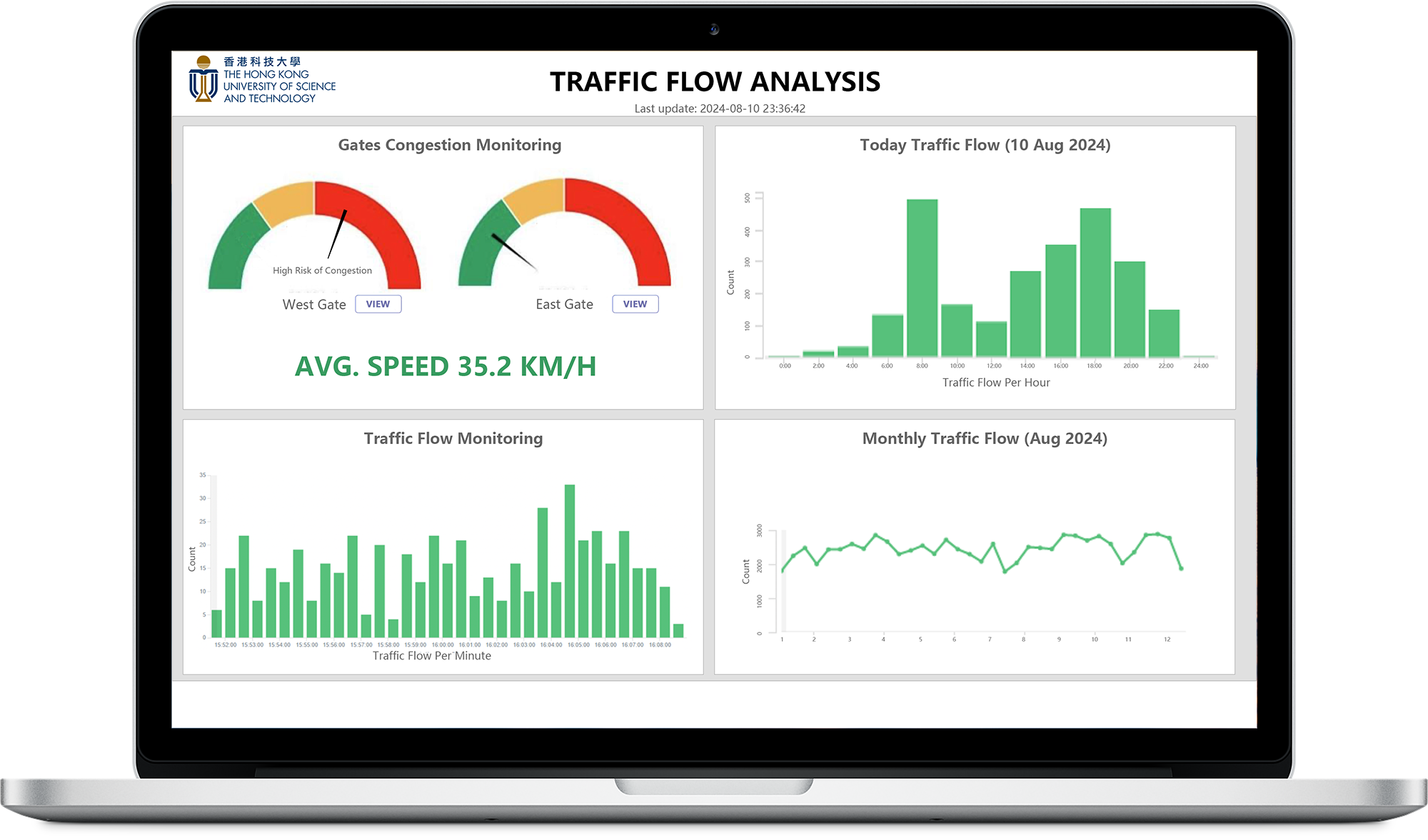
The real-time traffic flow analysis dashboard displays gate congestion monitoring, hourly and per-minute traffic flow metrics, average speed indicators, and monthly traffic trends for mega-event traffic management.
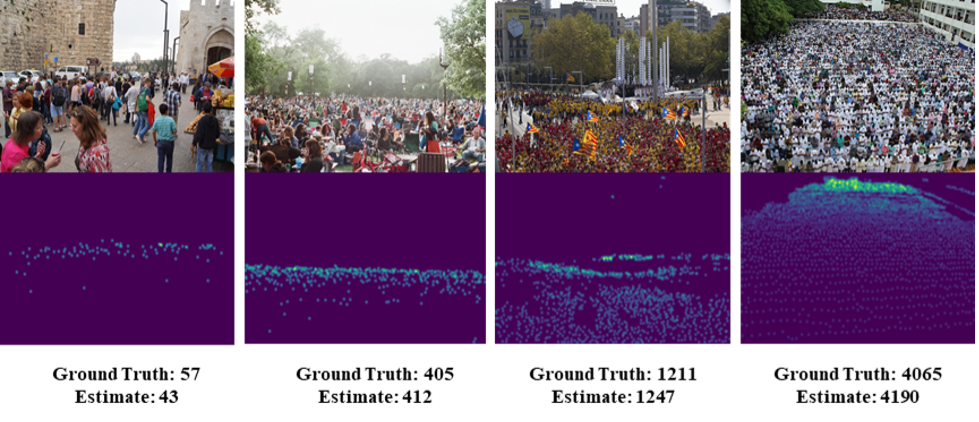
The AI-powered video analytics demonstrate pedestrian counting and crowd density mapping.
Impact & Metrics Comparison
By combining real-time monitoring, crowd and traffic analysis, and adaptive traffic management strategies, the project aims to support safer and more efficient mobility during mega events, helping to alleviate congestion and improve dispersal. Designed as a scalable smart-mobility solution, it seeks to generate knowledge and practical experience that could inform future deployment at other major event venues.
Kai Tak Sports Park (KTSP) provides a valuable context for studying these challenges because of its role as a major event venue, including Kai Tak Stadium, Kai Tai Arena and Youth Sports Ground. The project is intended to generate knowledge and practical experience that may inform future smart-mobility initiatives at large event venues.
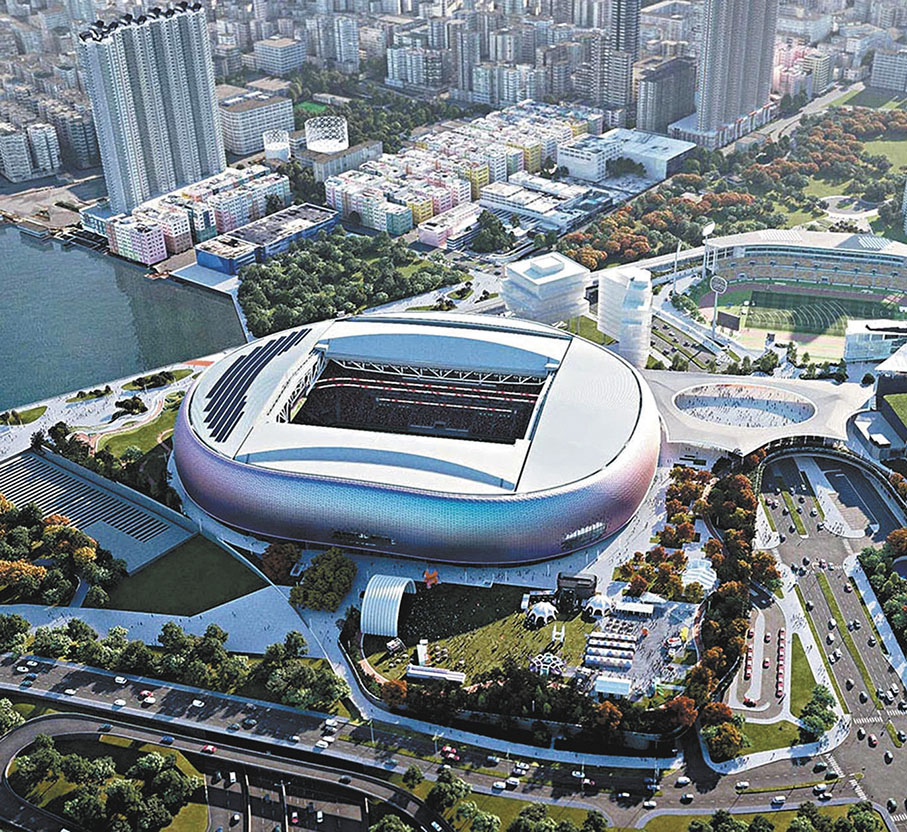
Aerial view of Kai Tak Sports Park, the primary mega-event venue for studying crowd and traffic management.